Ochre Line / Preparing surfaces
Could my old house have lead paint, and is it safe to sand?
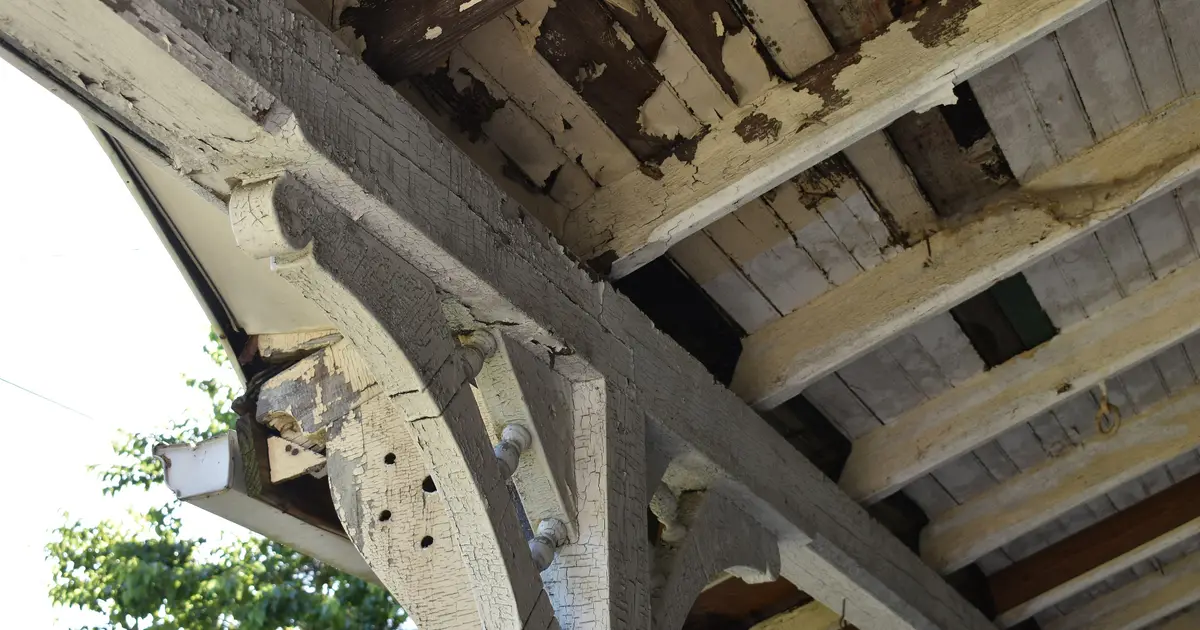
If your house was built before the 1980s and still has its old woodwork, it could well have lead paint somewhere in its layers, particularly on windows, doors and skirting. That is not an emergency if the paint is in good condition. The danger comes from dust, flakes and fumes when old paint breaks down or gets disturbed. Do not dry-sand it or burn it off until you know what you are dealing with.
This is general guidance rather than a survey of your home. If small children live in the house, someone is pregnant, or the paint is already flaking badly, take professional advice before you start.
How old is too old?
You will see different dates, and all of them are useful in different ways.
- Mid-1960sLead still in some paints, says Cambridge City Council
- Before 1980HSE treats paint removal in these properties as higher risk
- Early 1980sGone from decorative paints, says one manufacturer
- 1992Sale banned, says UKHSA, though old stock may survive
Cambridge City Council says lead was in some paints until the mid-1960s, mainly on windows, doors and other woodwork. The Health and Safety Executive's lead FAQs treat removing paint in pre-1980s properties as a higher-risk job. One paint manufacturer's guidance says lead had gone from UK decorative paints entirely by the early 1980s. The UK Health Security Agency's general information on lead says the sale of lead paint was banned from 1992 and that old products may still be in circulation.
The cautious reading: any paint layer older than about 1980 deserves care, while a mid-century or Victorian house probably has it somewhere. Bear in mind that it is the oldest layer that counts. A house can have been repainted a dozen times, and its door could still have lead at the bottom of the stack.
Where it usually is
Look first at old woodwork and metal, since those were the surfaces given hard, durable paints: sash windows and frames, doors and architraves, skirting boards, stair spindles, and old radiators or railings. Windows and doors also have a particular problem in that the opening and closing wears paint into dust at the edges.
Why it matters
The UKHSA says pregnant women, infants and young children are particularly sensitive to the harmful effects of lead, and that young children may be exposed through soil, dust and flakes of old paint because they often put things in their mouths. Exposure in the womb may affect a baby's IQ, behaviour and growth. Adults doing the work can also be exposed, and carry dust out of the room on their clothes. If you are worried that someone has been exposed, the UKHSA's advice is to speak to your GP or contact NHS 111.
Can you tell by looking?
Not reliably. Thick, stepped layers on an old door are a hint, as is the crazed, scaly pattern old paint can develop, but plenty of non-lead paint looks that way too. Testing kits are sold for home use, and the manufacturer's guidance above suggests using one. The public bodies we read do not set out a preferred test, and we have not assessed the kits, so read the instructions carefully. A test of the top coat alone tells you little about the layers underneath. For a firm answer, or before major work, ask a professional decorator or a testing lab. If you cannot test it, treat it as lead.
Do you need to strip it at all?
Usually not. This is the most helpful point in the official advice, and the one most often overlooked. Cambridge's page says that if the paint is in good condition, recent redecoration usually seals the lead in and poses little risk, and that a modern overcoat will do the job. The HSE tells workers to remove old paint only if it is flaking or chipping, or poses a risk to children.
| Condition | Sensible approach |
|---|---|
| Sound, no chips | Leave it. Key lightly with wet abrasive paper, wipe clean, and paint over. |
| Small chipped areas | Remove the loose material by wet methods only, seal and repaint. Clear up with a damp cloth. |
| Widespread flaking or peeling | Consider paying a professional decorator. HSE describes chemical stripper, wet abrasive paper and on-tool extraction for poor-condition paint. |
| Young children or a pregnancy in the home | Do not disturb it yourself. Take advice before any work, and keep them away from the area if any is done. |
What not to do
- Do not dry-sand. Cambridge warns that it releases lead dust. HSE lists it as a higher-risk job, together with stripping with blowlamps or gas torches. This includes an electric sander with no extraction, which spreads dust around quickly.
- Do not use a blowlamp, and do not overheat paint. The council says hot-air guns should stay below 450°C, just enough to soften the paint, as scorched paint gives off fumes.
- Do not sweep up dry. Dry brushing or a household vacuum can send fine dust back into the room. Wet wipe instead.
- Do not let the dust travel. Keep work clothes out of the rest of the house and wash them separately.
If you decide to go ahead
The steps below come from Cambridge's page and the HSE's FAQs. Note that the HSE material is aimed at people working in the trade, and that a job at home deserves the same care.
- Seal the work area and keep children and pregnant women out of it. Move furniture or cover it, along with carpets.
- Wear protective clothing and gloves, plus a P3-rated face mask (EN143 is the standard Cambridge names). A paper dust mask is not the same thing.
- Choose a wet or chemical method: a solvent or caustic stripper, a water-based remover or wet abrasive paper. Read the stripper's own safety sheet, and keep plenty of air moving.
- Wash your hands and bare skin before you eat, drink or do anything else.
- Clean up with water and detergent. Bag debris, cloths and abrasive paper, and ask your council where they should go.
Once it is sealed
Keep an eye on the parts of the house that get rubbed, such as window runners and door edges, as well as sills where children can reach. When the time comes to redecorate, our guide to preparing surfaces covers the rest of the process, and our finishes guide will help you decide what to put on top. A hard, cleanable finish suits woodwork that may have old paint below.
A note on sources. The Department for Environment, Food and Rural Affairs once published a leaflet on this topic. GOV.UK now marks it as withdrawn because it is out of date, so treat any old copies with caution. If you want advice about your specific home, your local council's environmental health team is a reasonable first call, and a member of a recognised decorating trade body should be able to advise on the work itself.